




3 - 4
<
>

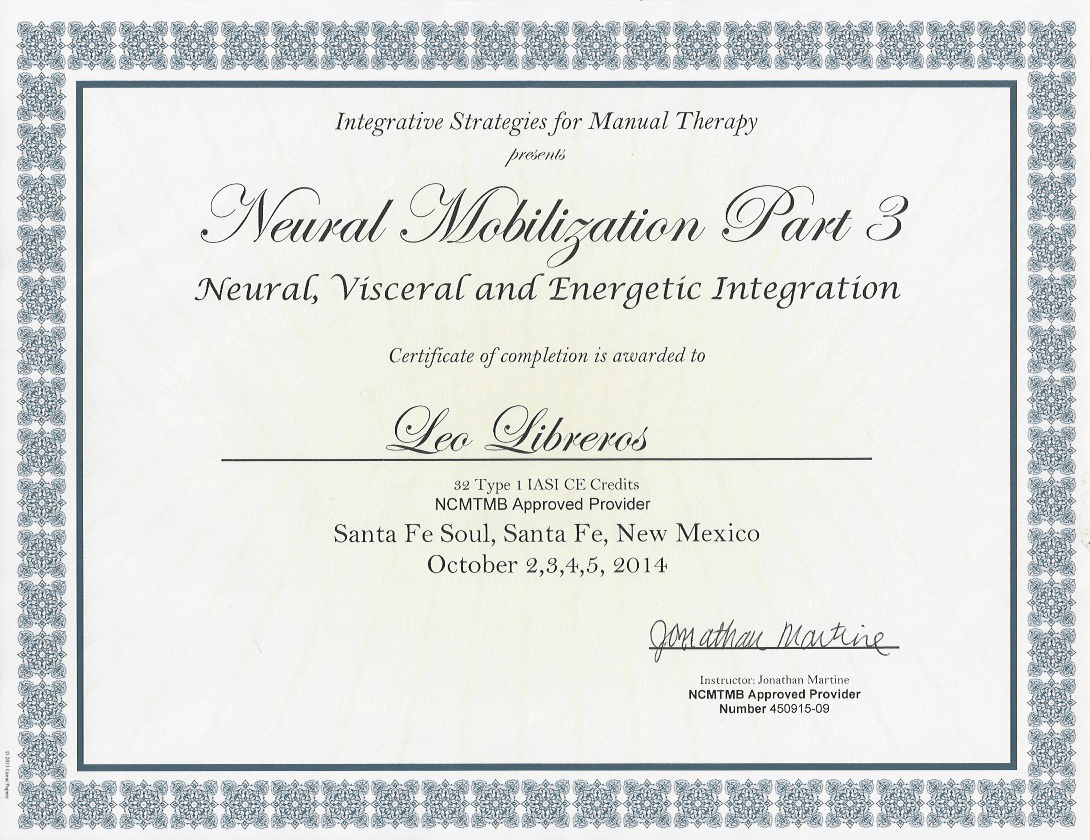
Leo Libreros
Integrative Manual Therapy for Pain,
Freedom of Movement and Performance
Structural Myofascial Bodywork
Structural Bodywork is a scientifically validated body therapy which unlike massage focuses, not only on muscles (myo) but on their protective layer, called Fascia (connective tissue). Muscles are contracting tissues that give the body and organs physical movement. The fascia surrounds the muscles, bones and organs in the body and gives muscles their shape and the body its structure.
Structural work aligns and balances the body by lengthening and repositioning the fascia. As fascia is lengthened it allows muscles to move more efficiently. When restricted fascia is released and lengthened through manual manipulation the body can return to its structurally optimal position.
When the body is aligned and balanced it moves with greater ease and requires less energy to function. Good posture is effortless and breathing is easier. The body becomes more flexible, more coordinated and athletic performance improves.
Nerve Manipulation Therapy
How does nerve pain feel?
Most people describe their chronic nerve pain with a similar set of words. Regardless of the cause, nerve pain can feel like of the following: burning, tingling, shooting, sharp, stabbing. Nerve pain may vary; for some it can feel mildly bothersome for others the pain may be severe and nearly unbearable.
Nerve pain may be localized (felt at or near the area of nerve damage) or referred (feel somewhere in the body).
Nerve mobilization is a type of therapy that aims to specially locate and treat fixations of nerves throughout the body. The treatment is performed by applying gentle, precise pressure to the nerve in order to glide of floss it to the nerve sheath, which is made of connective tissue and surrounds the nerve.
Visceral Manipulation Therapy
"Visceral" relates to the internal organs of the body, such as the liver, kidneys, and intestines. Visceral Manipulation is a gentle manual therapy that aids your body's ability to release restrictions and unhealthy compensations that cause pain and dysfunction. Visceral Manipulation (VM) does not focus solely on the site of the pain or dysfunction, but evaluates the entire body to find the source of the problem.
The VM therapist feels for altered or decreased motion within the viscera, as well as restricted patterns throughout the body and then applies VM techniques. VM therapy re-establishes the body's ability to adapt and restore itself to health.
Copyright © 2013 Leo Libreros
Web Design by Tuffboot Systems